From Captive to Classic: Miguel de Cervantes' Don Quichot Journey
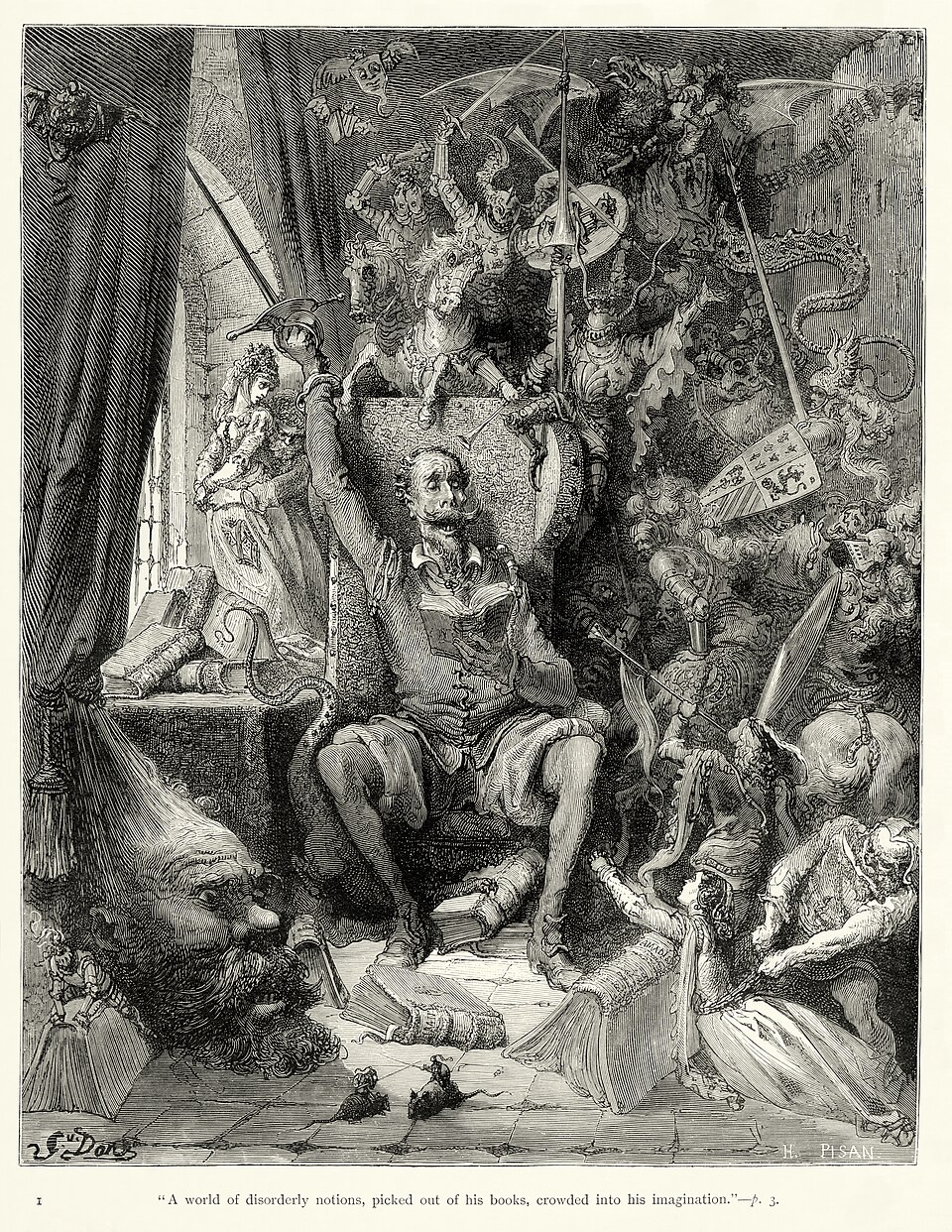
The figure of Don Quixote, the delusional knight-errant tilting at windmills, is etched into the global consciousness, a testament to the enduring power of its creator's imagination. But who was the man behind this timeless tale? The surname of the writer Don Quichot is, of course, Cervantes, a name now echoing through centuries of literature. Miguel de Cervantes Saavedra's life was a tumultuous odyssey, far more dramatic than many fictional narratives, filled with hardship, heroism, and the relentless pursuit of an artistic vision. From humble beginnings and harrowing captivity to the eventual triumph of his literary masterpiece, Cervantes' journey is a compelling narrative of resilience that profoundly shaped the landscape of modern literature. In 2015, the world received a poignant reminder of this legacy when archeologists in a former convent in Madrid uncovered a coffin bearing his initials, confirming the resting place of the literary giant born sometime around September 29, 1547.
The Formative Years of a Literary Titan
Miguel de Cervantes' early life was anything but stable, laying a foundation of experiences that would undoubtedly inform his later writings.
A Humble Beginning in Alcalá de Henares
Born in Alcalá de Henares, a town near Madrid, Miguel was the fourth of seven children. His father, Rodrigo de Cervantes, was a surgeon, albeit a deaf one, whose minimal income often plunged the family into financial straits. This constant economic struggle meant frequent relocations for the Cervantes family, exposing young Miguel to various regions and social strata of Spain. His mother, Leonor de Cortinas, hailed from a slightly more privileged background and, unusually for a woman of her time, had received a cultural education, enabling her to read and write. This exposure to literacy through his mother likely nurtured Miguel's early love for books and learning, a spark that would eventually ignite his unparalleled literary career.
The Enigma of Cervantes' Education
While it's clear Miguel de Cervantes developed into one of history's most eloquent writers, details regarding his formal education remain surprisingly scarce and a subject of ongoing debate among scholars. Some suggest he might have been schooled by Jesuits, known for their rigorous intellectual training, while others dispute this, arguing he likely never attended university. What is undeniable, however, is that Cervantes became an incredibly fervent reader. This self-driven pursuit of knowledge through literature speaks volumes about his innate intellectual curiosity and dedication. Around 1569, his first known poem, an elegy for Queen Elisabeth of Valois, wife of King Philip II, was published in a commemorative book by the humanist Juan López de Hoyos. Many believe De Hoyos served as Cervantes' mentor, and crucially, was a known admirer of the Dutch humanist Desiderius Erasmus. Erasmus's emphasis on human dignity, reason, and social satire would subtly, yet profoundly, weave its way into the philosophical undercurrents of Cervantes' later works, especially *Don Quixote*.
From Battlefield to Captivity: A Life Forged in Fire
Before he became a literary icon, Miguel de Cervantes lived a life of extraordinary adventure, marked by military heroism and a brutal period of enslavement that would leave an indelible mark on his soul.
Valiant Service in the Spanish Army
In 1570, driven by a thirst for adventure or perhaps economic necessity, Miguel de Cervantes enlisted in the Spanish army stationed in Naples, Italy. His military career quickly plunged him into one of the most significant naval engagements of the era: the Battle of Lepanto in 1571. Aboard the galley *La Marquesa*, Cervantes fought with remarkable bravery, sustaining three severe wounds—two in his chest and one that permanently maimed his left hand, earning him the moniker "the Manco de Lepanto" (the one-handed man of Lepanto). Despite these life-altering injuries and a near-fatal bout of fever, Cervantes refused to abandon his post, continuing his service in the years that followed. His courage and unflinching resolve in the face of such adversity were widely celebrated, showcasing a spirit that would later infuse the determined, if misguided, idealism of his most famous character. This period of service also offered him a vast panorama of life, people, and regions across the Mediterranean, all grist for his future literary mill. To learn more about his challenging experiences, consider reading
The True Story of Miguel de Cervantes, Creator of Don Quichot.
The Ordeal of Algerian Captivity
The challenges of Cervantes' life, however, were far from over. In 1575, while sailing back to Spain, his ship was intercepted by Ottoman corsairs. He, along with his brother Rodrigo, was taken captive and sold into slavery in Algiers. What followed were five arduous years of confinement, during which Cervantes made multiple daring attempts to escape, all tragically unsuccessful. His bravery during these attempts, often taking responsibility to protect his fellow captives, further underscored his indomitable spirit. This period of captivity was one of profound suffering and uncertainty, shaping his perspective on freedom, courage, and human resilience. It wasn't until 1580 that his family, through immense sacrifice and the assistance of Trinitarian friars, managed to gather the ransom money required for his freedom. The emotional and psychological toll of these years, however, would resonate deeply in his later works, providing a rich, often poignant, backdrop for his exploration of human nature under duress.
The Birth of a Masterpiece: Don Quixote's Genesis
Upon his return to Spain at the age of 35, Cervantes faced the daunting task of rebuilding his life. The path to literary greatness was neither direct nor easy.
Early Literary Attempts and Personal Struggles
The years immediately following his release saw Cervantes attempting to resume his writing activities while also seeking stable employment. He served as a commissary for the Spanish Armada, a role that often led to financial mismanagement accusations, legal troubles, and even multiple imprisonments due to unpaid debts. His first significant literary effort, the pastoral novel *La Galatea*, published in 1585, received a lukewarm reception. He then tried his hand at playwriting, a more lucrative venture at the time, but without much lasting success. These years were a crucible of financial instability, personal setbacks, and artistic frustration, demonstrating that even a genius like Cervantes had to endure a long apprenticeship of struggle before finding his true voice. For a deeper dive into the man himself, explore
Miguel de Cervantes: Unraveling the Writer of Don Quichot.
Don Quixote: A Novel Born from Adversity
It was during one such period of imprisonment in Seville in 1597, for irregularities in his accounts, that Miguel de Cervantes—indeed, the *surname of the writer Don Quichot*—conceived his magnum opus. The first part, *El Ingenioso Hidalgo Don Quixote de la Mancha* (The Ingenious Gentleman Don Quixote of La Mancha), was published in 1605. It was an instant, resounding success. The public was captivated by its fresh, satirical take on the popular, yet increasingly outdated, chivalric romances. Don Quixote was not just a story; it was a groundbreaking literary achievement, pioneering what we now recognize as the modern novel. It masterfully blended humor, pathos, and profound philosophical inquiry into the nature of reality, idealism, and the power of imagination. The second part of the novel, necessitated partly by the appearance of a false sequel, was published in 1615, completing the epic journey of the knight and his loyal squire, Sancho Panza. This two-part masterpiece, born from a life of incredible hardship, transformed Cervantes from a struggling writer into an immortal literary figure.
The Enduring Legacy of Don Quixote
More than four centuries after its initial publication, *Don Quixote* remains one of the most translated and influential books in world literature. Its impact extends far beyond the realm of Spanish letters, permeating global culture and influencing countless authors, artists, and thinkers.
The novel's genius lies in its multi-layered narrative and complex characters. Don Quixote, the aging nobleman who imagines himself a knight-errant, and Sancho Panza, his pragmatic squire, embody the eternal human struggle between idealism and realism, dreams and mundane existence. Their adventures, often comical yet profoundly touching, delve into themes of madness and sanity, honor and delusion, freedom and responsibility. Cervantes revolutionized storytelling by giving his characters psychological depth, allowing their inner lives and motivations to drive the plot. He broke free from conventional literary forms, creating a narrative that was self-aware, meta-fictional, and deeply human.
The term "quixotic," derived from the novel, has entered the English lexicon, signifying idealistic but impractical endeavors. This alone speaks volumes about the novel's lasting cultural resonance. *Don Quixote* continues to be studied, adapted, and reinterpreted because its core themes are universal and timeless. It encourages us to question our perceptions of reality, to consider the power of storytelling itself, and to find both humor and tragedy in the human condition. It reminds us that even in the face of life's absurdities and disappointments, the pursuit of ideals, however misguided, can imbue existence with meaning.
Conclusion
The journey of Miguel de Cervantes, the undisputed *writer Don Quichot*, was a tapestry woven with threads of valor, suffering, resilience, and boundless creativity. From the financial struggles of his youth, through the horrors of war and slavery, to the frustrations of an often-unrecognized talent, Cervantes endured more in his lifetime than many could ever imagine. Yet, it was precisely these profound experiences, coupled with his keen intellect and empathetic understanding of humanity, that forged the genius capable of crafting *Don Quixote*. His masterpiece is not merely a witty satire; it is a profound philosophical inquiry into the human spirit, a work that continues to challenge, entertain, and inspire readers across the globe. Cervantes' life stands as a powerful testament to the idea that true creativity can emerge from the deepest adversities, proving that even a life fraught with challenges can ultimately yield an immortal legacy.