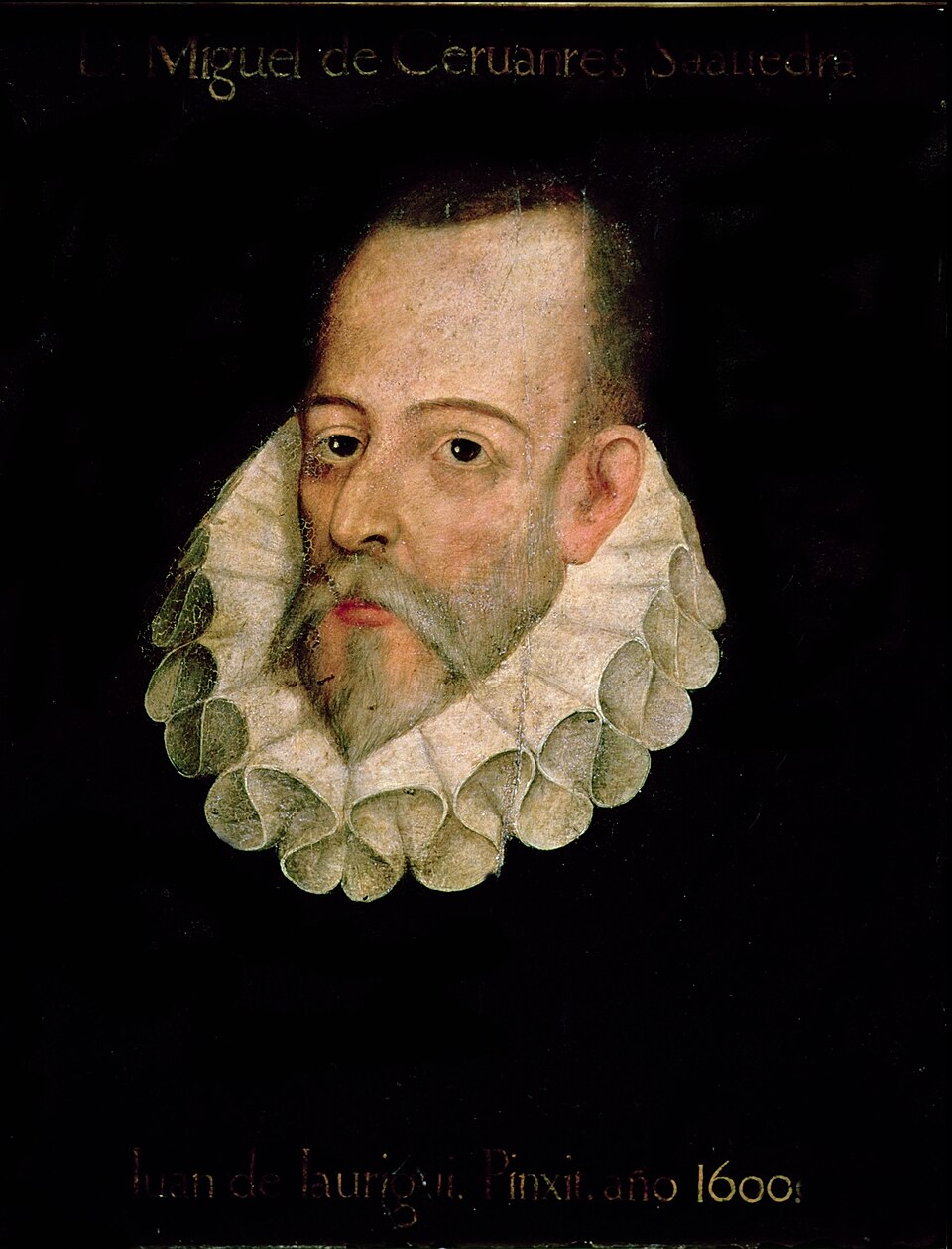
Miguel de Cervantes: Unraveling the Writer of Don Quichot
When we speak of literary giants whose works have transcended time and culture, the name of Miguel de Cervantes Saavedra invariably comes to mind. He is the undisputed author of one of the world's most influential novels, *Don Quichot*, known in English as *Don Quixote*. For those wondering, "Wat is de achternaam van de schrijver Don Quichot?" the answer is definitively **Cervantes**. This Spanish master of words left an indelible mark on literature, crafting a tale that continues to provoke thought, inspire dreamers, and challenge perceptions of reality and idealism. But who was the man behind the legendary knight and his faithful squire? His life was as dramatic and adventurous as any of his fictional narratives, a journey through poverty, war, captivity, and ultimately, literary immortality. The recent discovery of his remains in 2015 within a former convent in Madrid, identified by a coffin bearing his initials, brought renewed attention to the enduring legacy of this monumental figure.
The Formative Years of a Literary Legend
Miguel de Cervantes' early life was a crucible of challenges that undoubtedly forged the resilient spirit evident in his later works. Born likely on September 29, 1547, in the historic town of Alcalá de Henares, near Madrid, he was the fourth of seven children. His family, though rooted in a respectable lineage, constantly grappled with financial instability.
A Humble Beginning in Alcalá de Henares
Cervantes' father, Rodrigo de Cervantes, was a deaf surgeon—a profession that, while vital, often yielded only a minimal income. His mother, Leonor de Cortinas, came from a slightly higher social standing and was notably cultured, possessing the rare ability for a woman of her era to read and write. This invaluable skill likely nurtured a love for letters in young Miguel from an early age. The family's persistent financial woes necessitated frequent relocations throughout his childhood, denying him a stable environment and likely exposing him to a wide spectrum of Spanish society, an experience that would later enrich his keen observations of human nature. These early struggles with poverty and societal class may have deeply informed Cervantes' later satirical approach to social hierarchies and the quixotic pursuit of honor.
The Unconventional Path to Knowledge
Surprisingly, given his later literary prowess, much remains unknown about Miguel de Cervantes' formal education. Some scholars suggest he may have been schooled by Jesuits, a prominent educational order of the time, while others dispute this. What is widely accepted, however, is that Cervantes probably never attended a university. Despite this potential lack of formal higher education, he developed into a voracious and fervent reader, a self-taught intellectual whose literary appetite was insatiable. Around 1569, his talents first surfaced publicly with a poem dedicated to the death of Queen Elisabeth of Valois, wife of King Philip II. This early work was published in a collection by the humanist Juan López de Hoyos, who many believe served as Cervantes' mentor. Hoyos was an admirer of the Dutch humanist Desiderius Erasmus, whose critical and often satirical perspectives on society and religion are thought to have profoundly influenced Cervantes' own developing worldview, laying the groundwork for the astute social commentary found in *Don Quichot*.
From Battlefield to Captivity: Cervantes' Adventurous Life
Cervantes' life was far from that of a cloistered scholar; it was a saga marked by military valor, profound suffering, and remarkable resilience. These extraordinary experiences were not merely biographical footnotes but the very crucible in which his genius was forged, providing him with a unique understanding of human courage, folly, and the relentless pursuit of freedom. To truly appreciate the depth of his narratives, one must understand the man who lived them. Discover more about his incredible personal journey in
The True Story of Miguel de Cervantes, Creator of Don Quichot.
Military Valor and Wounds of War
In 1570, Miguel de Cervantes enlisted in the Spanish army stationed in Naples, Italy, embarking on a path that would forever alter his life and body. The pinnacle of his military service came in 1571 at the Battle of Lepanto, a decisive naval engagement where the Holy League defeated the Ottoman Empire. Aboard the ship *La Marquesa*, Cervantes fought with immense bravery, suffering severe wounds: he was shot in his left hand, rendering it permanently maimed, and twice wounded in his chest. He even narrowly escaped death from a fever attack. Despite these life-threatening injuries, his courage and unwavering resolve were widely lauded, and he continued his service for several years thereafter. This period of military campaigning undoubtedly exposed him to the grand narratives of heroism and the harsh realities of war, themes he would subtly explore and subvert in his literary endeavors.
Five Years as an Algerian Slave
The adventurer's path took a cruel turn in 1575. While returning to Spain, Cervantes' ship was intercepted by Turkish corsairs, leading to his capture and subsequent enslavement in Algiers, then a center of Ottoman power. For five agonizing years, Miguel de Cervantes endured the brutal conditions of captivity. Far from succumbing to despair, he made multiple, daring attempts to escape, each meticulously planned but ultimately unsuccessful. His unwavering spirit and leadership during these attempts earned him respect even from his captors. It was only in 1580 that his family, through immense effort and sacrifice, managed to pay his ransom, finally allowing Miguel de Cervantes to return to his homeland, a free man but profoundly marked by his ordeal. This period of intense suffering and the yearning for freedom would undoubtedly infuse his later writing with a poignant understanding of the human spirit's capacity for endurance.
The Birth of Don Quichot: A Revolutionary Masterpiece
Upon his return from captivity, at the age of 35, Cervantes was a seasoned veteran of life's brutal battles, yet he was still far from achieving the literary recognition he deserved. His path to becoming the celebrated writer of *Don Quichot* was paved with further setbacks and persistent hardship, highlighting a remarkable tenacity.
Early Literary Endeavors and Persistent Challenges
The years immediately following his return were a tumultuous mix of resumed literary efforts and continued personal struggles. Cervantes briefly served as a commandant for the royal marine, undertaking missions that, much like his personal finances, were largely unsuccessful. He even found himself imprisoned multiple times due to unpaid debts – a recurring theme in his life that perhaps ironically granted him the solitude necessary for deep reflection and creative output. His first major literary work, *La Galatea*, a pastoral novel published in 1585, failed to achieve significant success. Despite these ongoing challenges and the lukewarm reception of his initial efforts, Cervantes never abandoned his passion for writing, demonstrating a resilience that mirrored the fantastical determination of his future protagonist.
Don Quichot's Conception: From Prison to Page
It is one of history's most compelling ironies that the genesis of *Don Quichot*, one of the most influential novels ever written, occurred during yet another period of Cervantes' imprisonment for debt in Seville, around 1597. It was within these confined walls that the audacious idea of an aging nobleman, deluded by chivalric romances, was conceived. The first part of *El Ingenioso Hidalgo Don Quixote de la Mancha* (or *The Ingenious Gentleman Don Quixote of La Mancha* in English, with "Quichot" being the Dutch spelling) was published in 1605. Its reception was immediate and overwhelming; it was an instant sensation. The novel captivated readers because it ingeniously parodied the popular yet formulaic chivalric epics of the time, offering a refreshing and deeply human critique of societal norms and the nature of idealism. This groundbreaking work is often credited as one of the very first modern novels, challenging narrative conventions and delving into complex psychological realism. The second part, which further explores the adventures and philosophical musings of Don Quichot and his squire, Sancho Panza, followed a decade later in 1615, solidifying the work's place as an unparalleled literary achievement. To reiterate, the surname of the writer of Don Quichot is **Cervantes**. His journey from a captive to a classic author is truly remarkable. Delve deeper into the creation of this masterpiece in
From Captive to Classic: Miguel de Cervantes' Don Quichot Journey.
The Enduring Legacy of Cervantes and His Knight
The impact of *Don Quichot* on world literature is immeasurable. More than just a story, it is a philosophical treatise on the human condition, a comedic masterpiece, and a poignant exploration of the blurred lines between reality and illusion, sanity and madness. Cervantes' novel introduced a revolutionary narrative style, incorporating elements of realism, parody, and psychological depth that were unprecedented for its time.
Its themes resonate as powerfully today as they did centuries ago. The struggle between idealism (Don Quichot's noble but often misguided quests) and realism (Sancho Panza's earthy pragmatism) is a universal human experience. The novel questions the nature of heroism, the power of storytelling to shape perception, and the individual's place in a world that often refuses to conform to one's grandest visions. Cervantes, through his characters, invites readers to consider if it is better to live a life of mundane reality or to chase an impossible dream, even if it means tilting at windmills.
*Don Quichot* has been translated into virtually every language, adapted countless times for stage, screen, and opera, and continues to be studied and debated by scholars worldwide. It has inspired generations of writers, artists, and thinkers, cementing Miguel de Cervantes' place as one of the most important figures in literary history, comparable to Shakespeare in his profound influence. For any aspiring writer or avid reader, studying *Don Quichot* offers invaluable insights into character development, narrative structure, and the timeless power of satire and humanistic inquiry.
Conclusion
Miguel de Cervantes Saavedra, the brilliant mind behind the iconic *Don Quichot*, led a life as rich and complex as the narratives he penned. From his humble beginnings and unconventional education to his valorous military service, harrowing enslavement, and struggles with poverty and imprisonment, every chapter of his life contributed to the unique perspective that allowed him to craft such a universally resonant masterpiece. When asked, "Wat is de achternaam van de schrijver Don Quichot?", we confidently affirm it is **Cervantes**. His enduring legacy lies not only in the unforgettable characters of Don Quichot and Sancho Panza but in the revolutionary literary techniques and profound philosophical questions his work introduced. Cervantes' journey reminds us that genius often emerges from the crucible of adversity, leaving behind stories that continue to challenge, entertain, and inspire humanity across the ages.